Kinetic Perimetry in VR

Measure real visual efficiency.

VR Visual Efficiency assesses peripheral visual field and reaction times with a kinetic perimetry test entirely in virtual reality — field-tested with athletes and coaching staff.
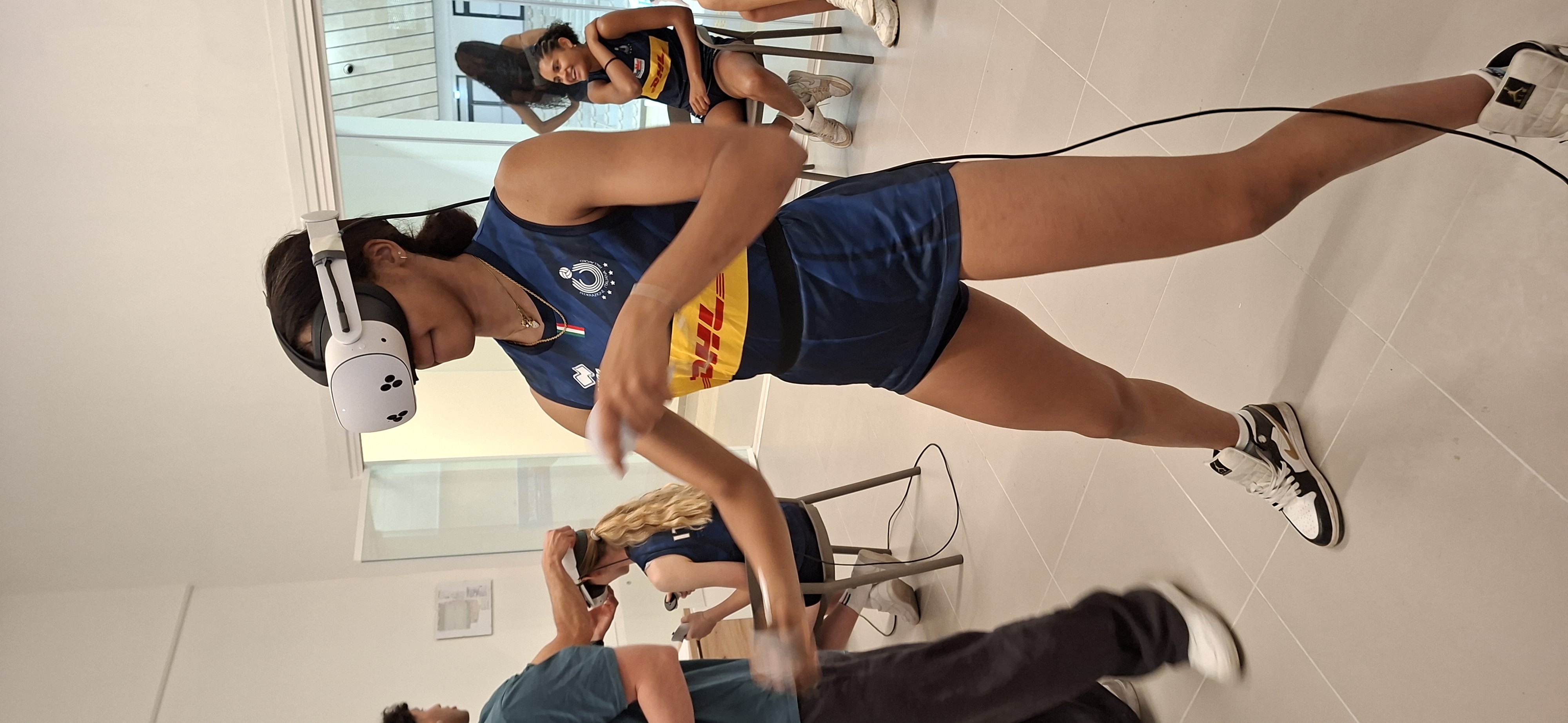
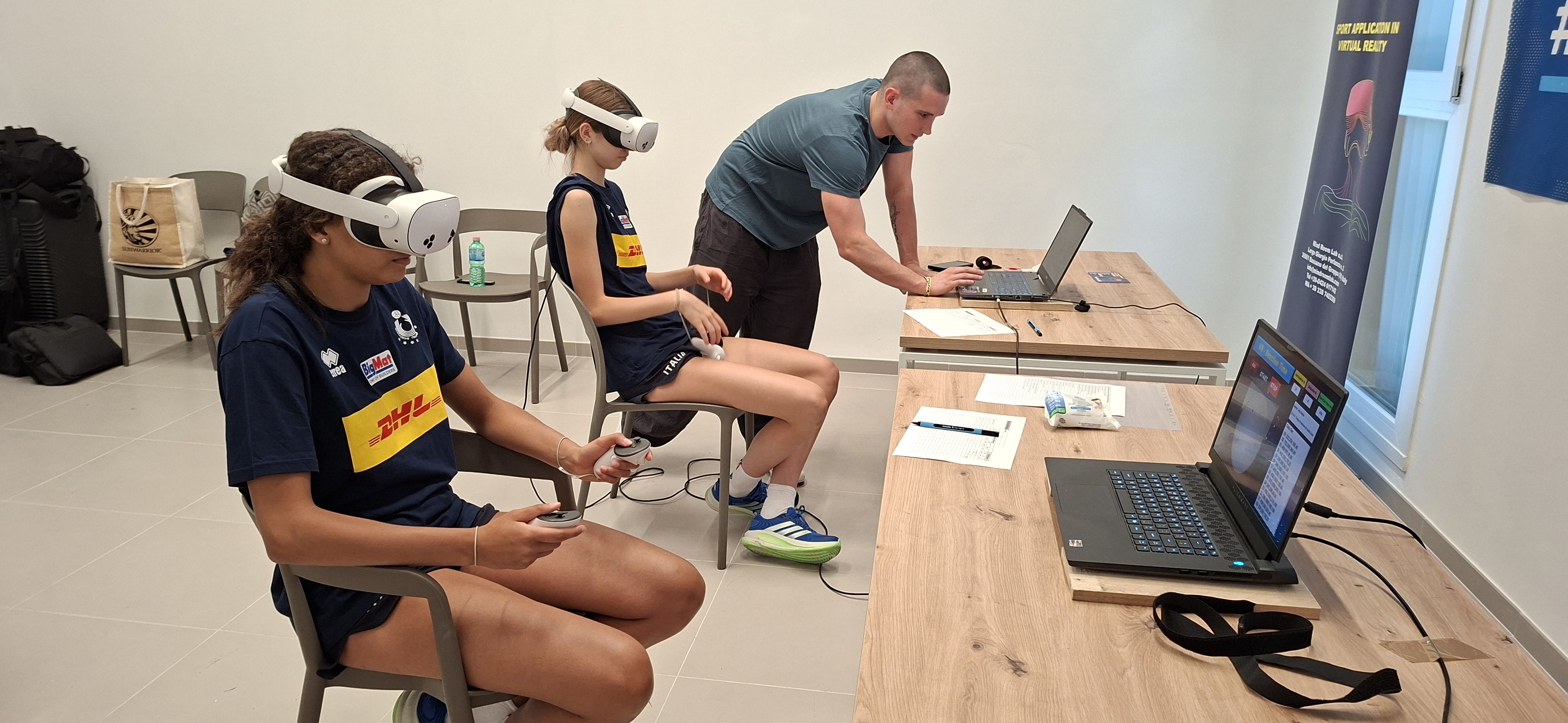
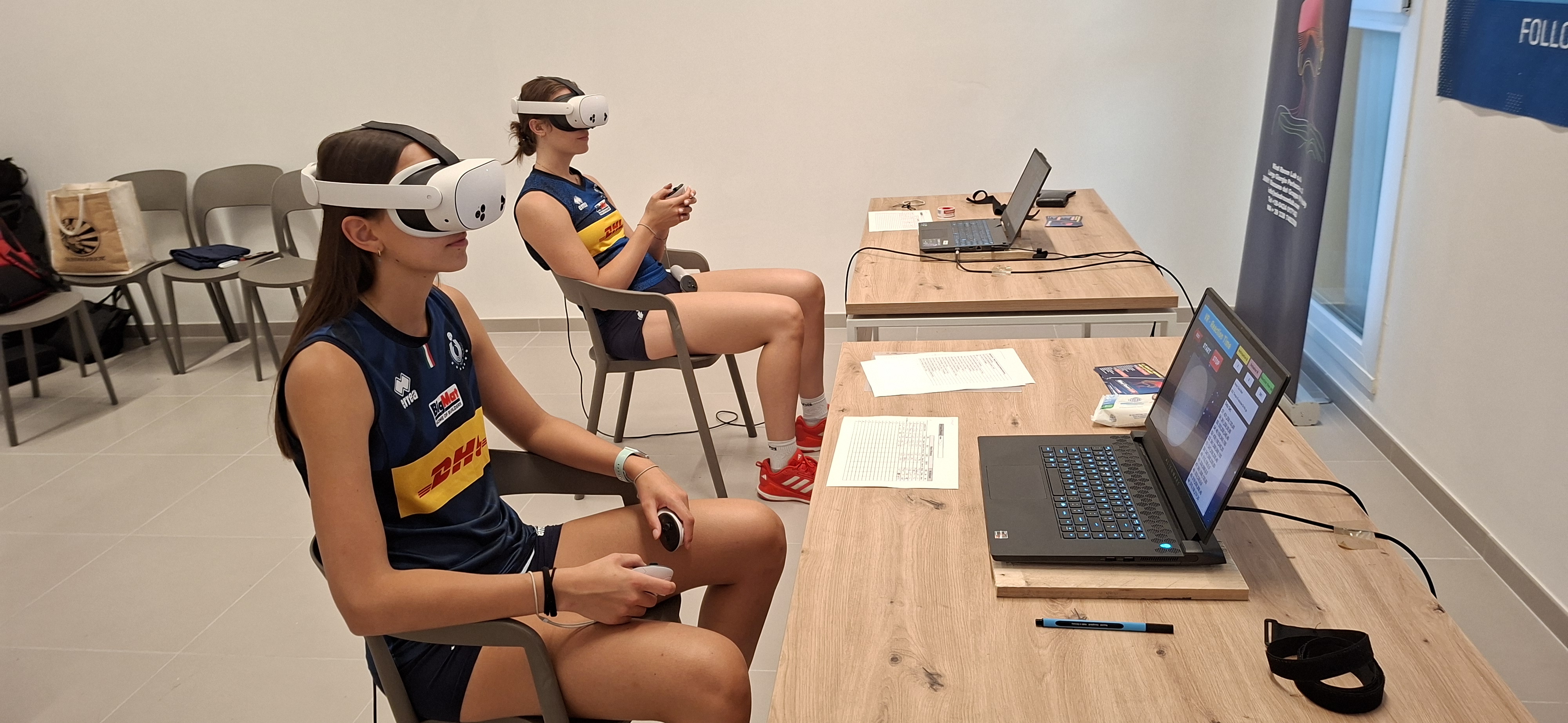
Athlete wearing a VR headset during a visual efficiency test

Test in progress

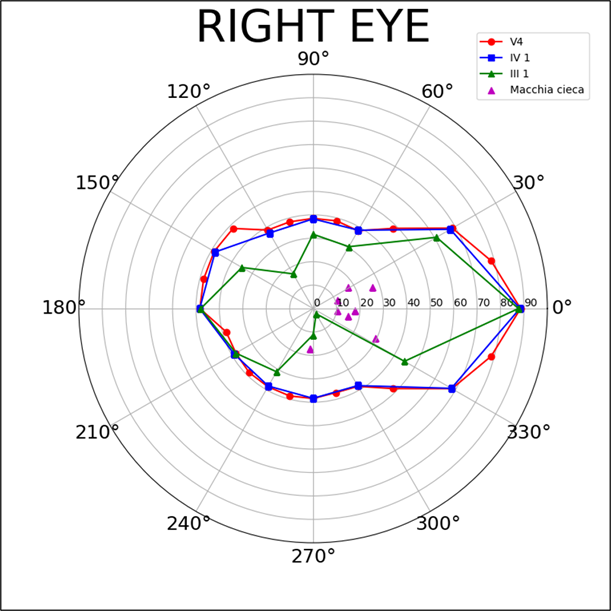
Kinetic perimetry · Right eye

In the field

Field-tested with athletes, coaching staff and research centers

VR Visual Efficiency has been taken onto the field together with teams and university research centers to validate the protocol on real athletes.

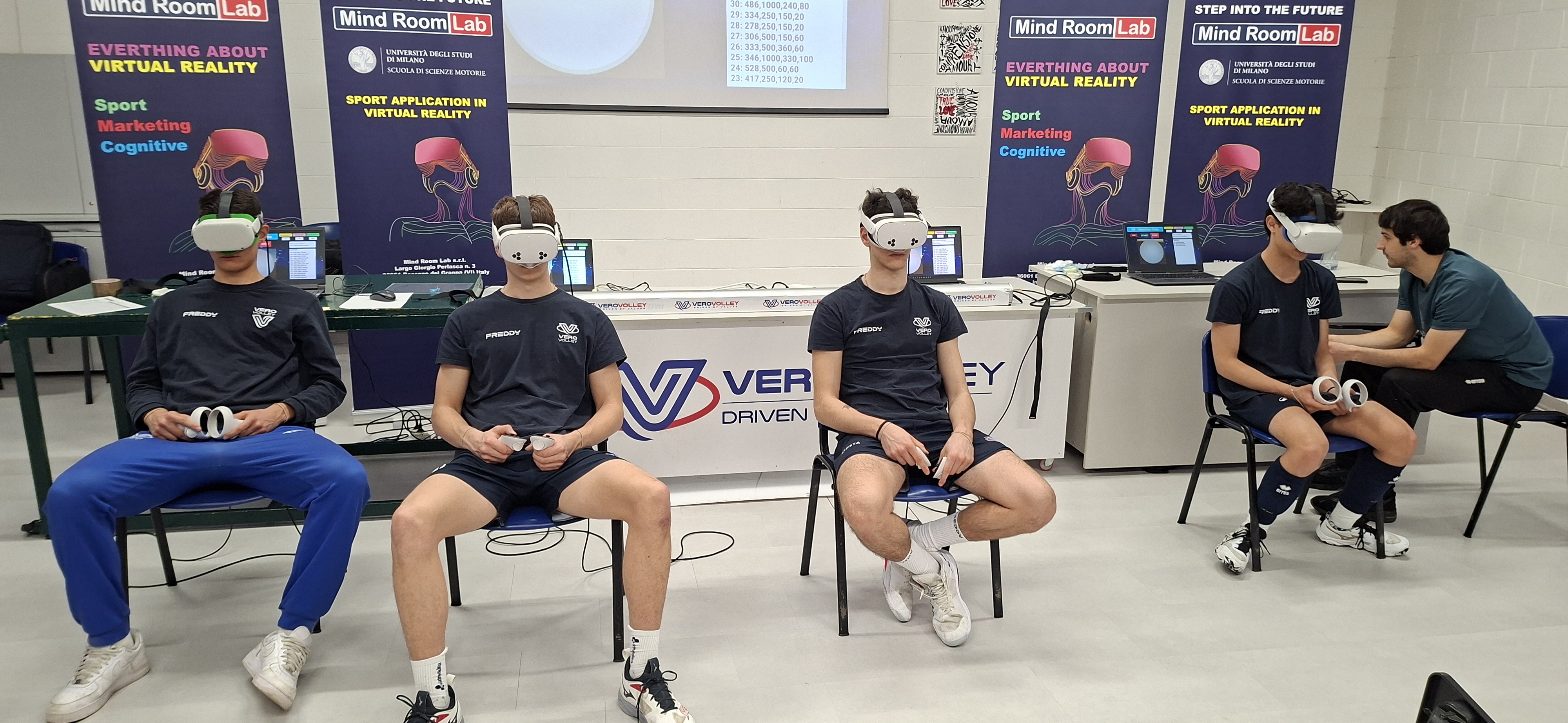
  • Mind Room Lab
  • University of Milan — School of Exercise and Sport Sciences
  • Italian Youth National Volleyball Team

What we measure

Three dimensions of visual efficiency

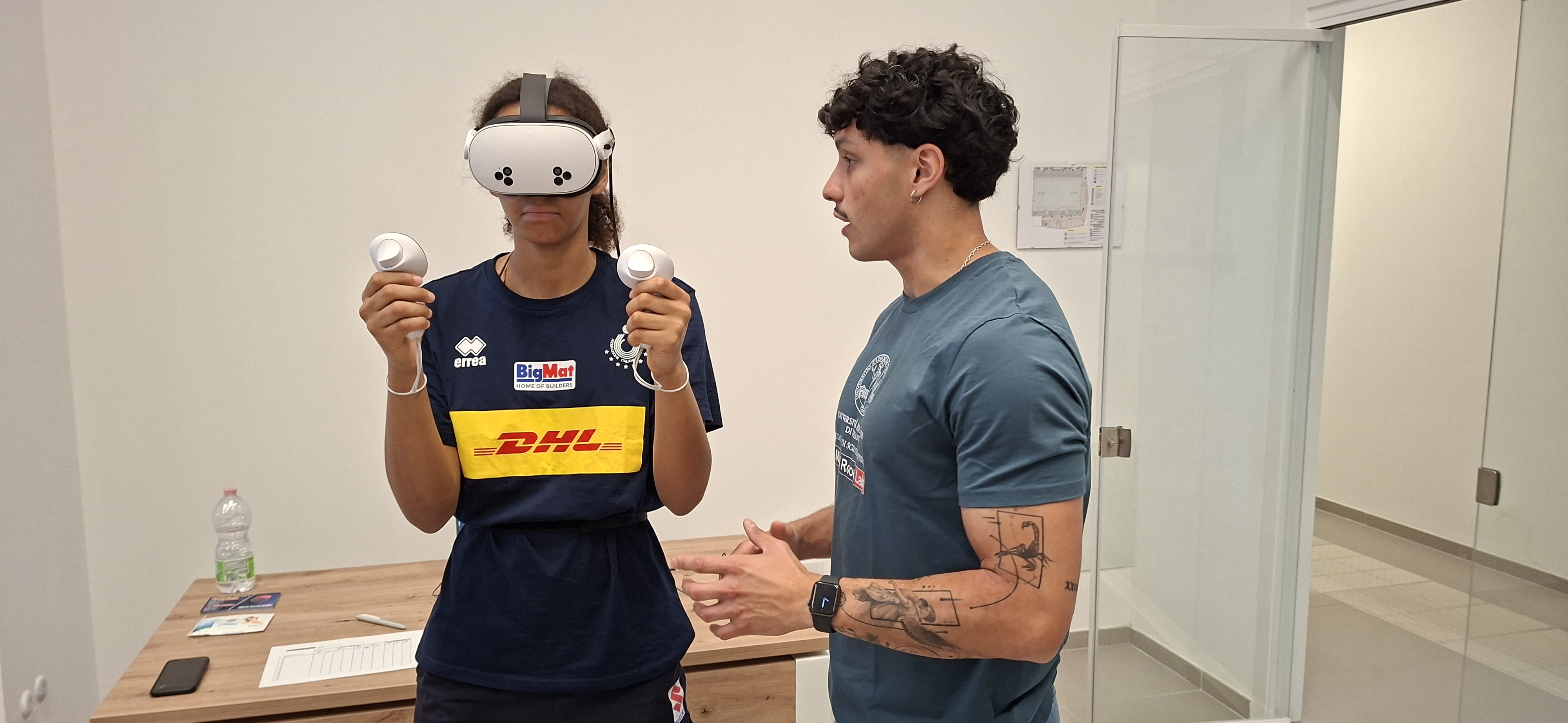
Kinetic perimetry test in progress Briefing before the reaction time test Attentional capacity test with two athletes

The test maps the boundaries of the visual field by presenting a light stimulus that moves from the periphery toward the center of vision: the person signals as soon as they perceive it, and the system records every detected point to build the kinetic perimetry chart.

01/03

The software

The application, screen by screen

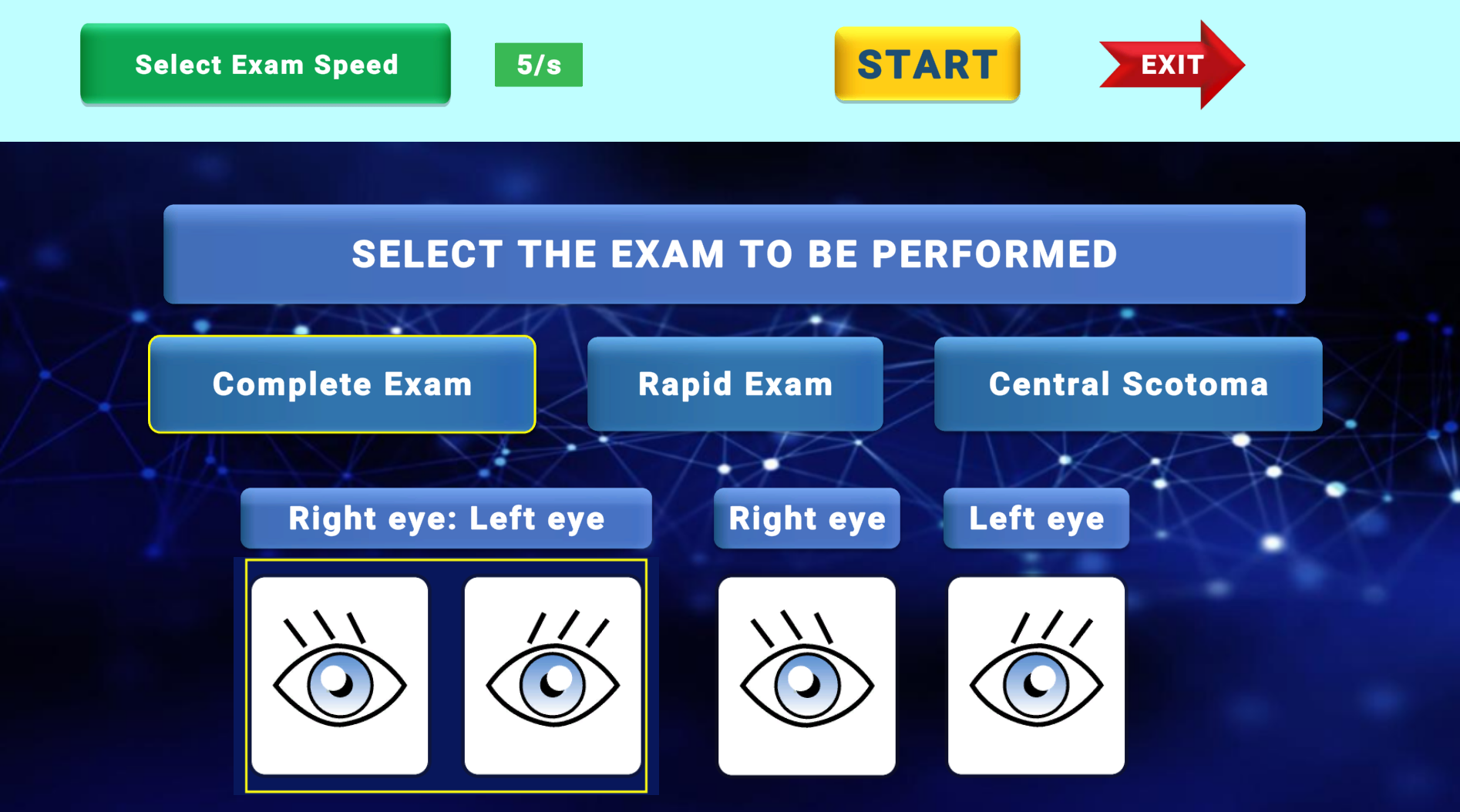
Exam selection screen: complete, quick, or central scotoma

Exam selection

Complete Exam - Quick Exam - Central Scotoma — for right eye, left eye, or both, with adjustable, gradable stimulus speed.
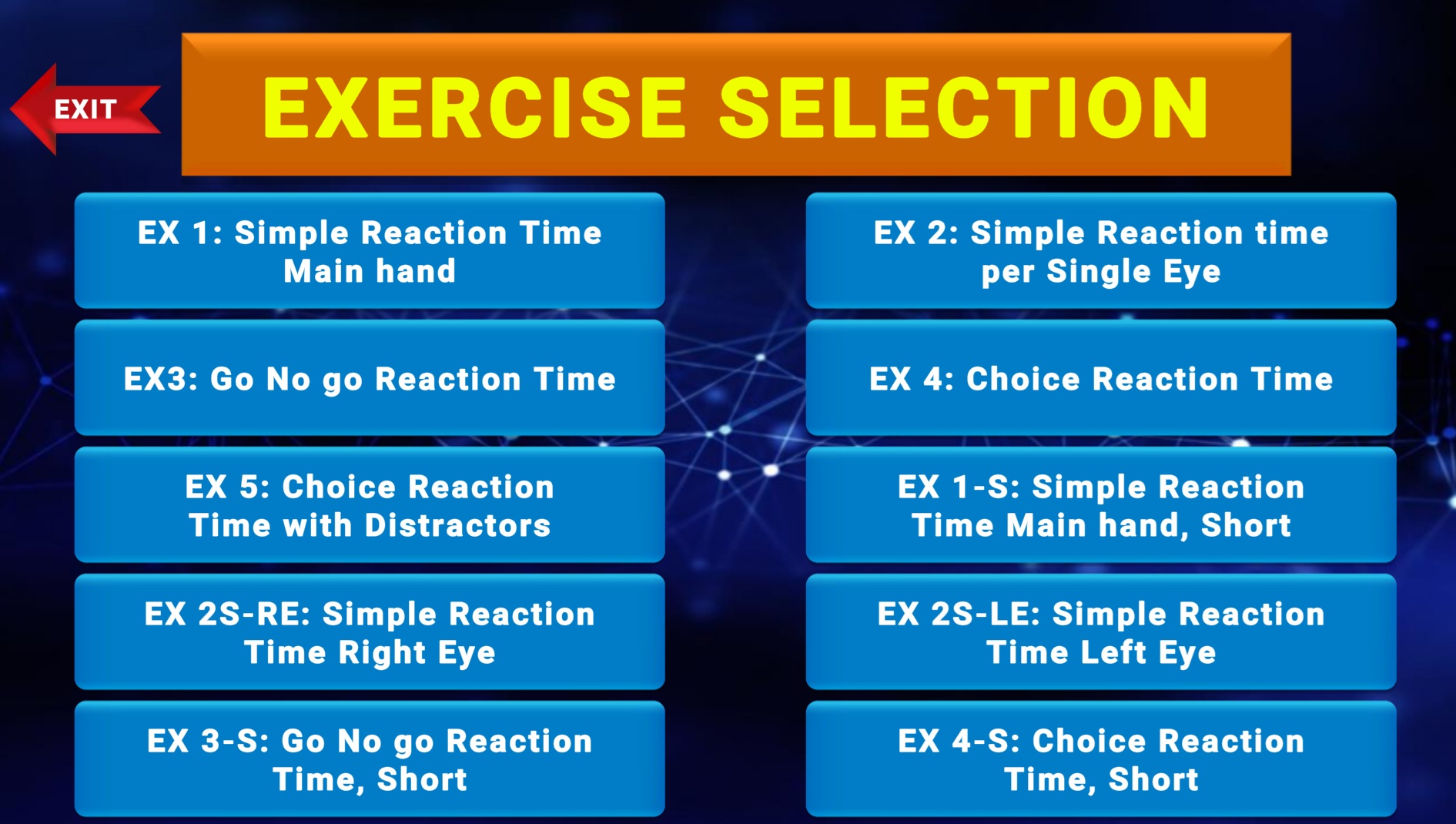
Reaction time exercise selection screen

Reaction modes

Ten configurable protocols for reaction times.
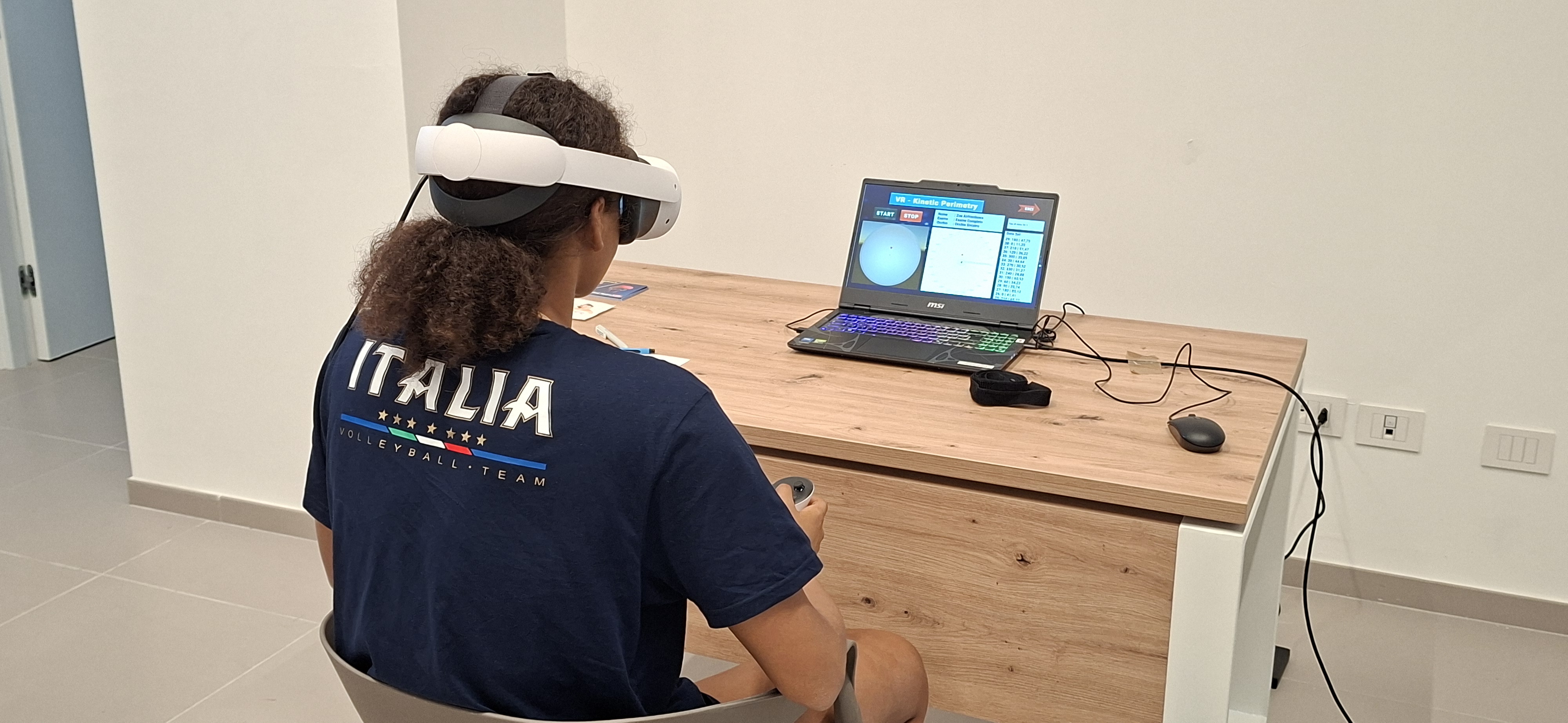
Operator monitoring the test from a laptop during a real session

Real-time data

Every trial is recorded live and returned as a kinetic perimetry chart at the end of the test.

How it works

The kinetic perimetry test

Kinetic perimetry is a visual field test in which a moving stimulus — a light — is presented, and the person must indicate it as soon as it appears in their visual field.

The stimulus moves from the periphery toward the center of vision, recording the points where it is detected and thus mapping the boundaries of the visual field to produce the kinetic perimetry chart.

Having good eyesight (sharpness or acuity) doesn't guarantee good kinetic perimetry.
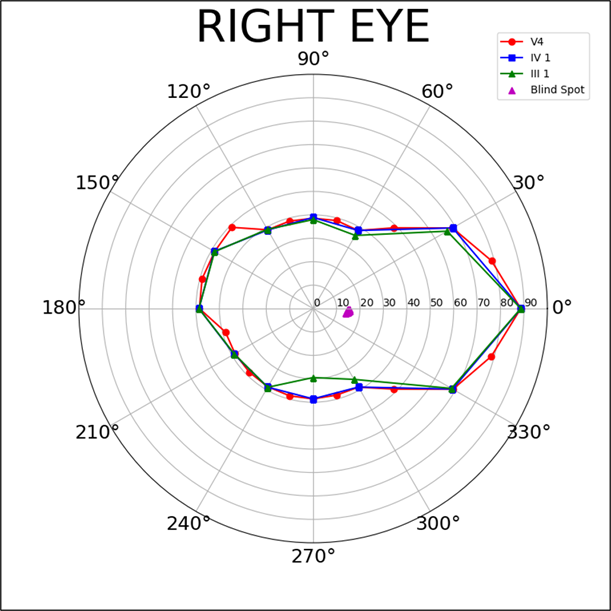
Good kinetic perimetry, right eye
Right eye profile — good kinetic perimetry
Poor kinetic perimetry, right eye
Right eye profile — poor kinetic perimetry

The result

A complete analysis, eye by eye

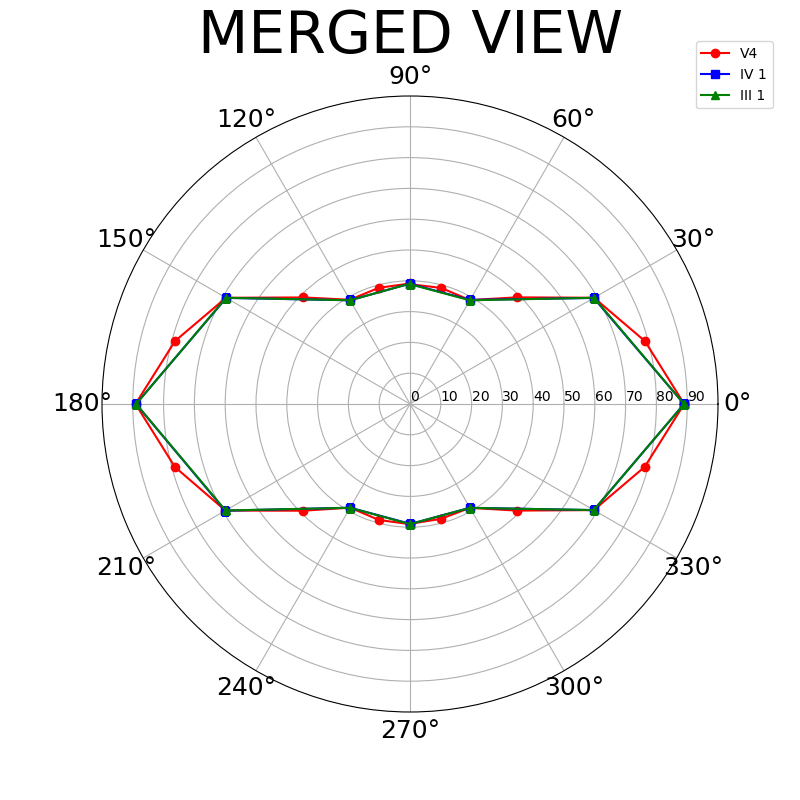
The system returns the profile of each eye and their 90° merged union in a single view, useful for reading the complete kinetic perimetry of the person tested.
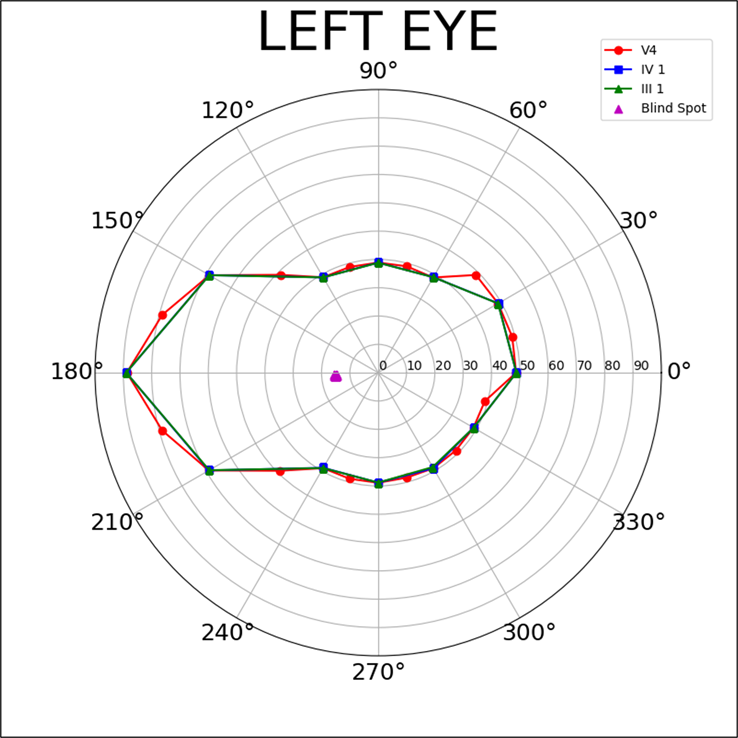
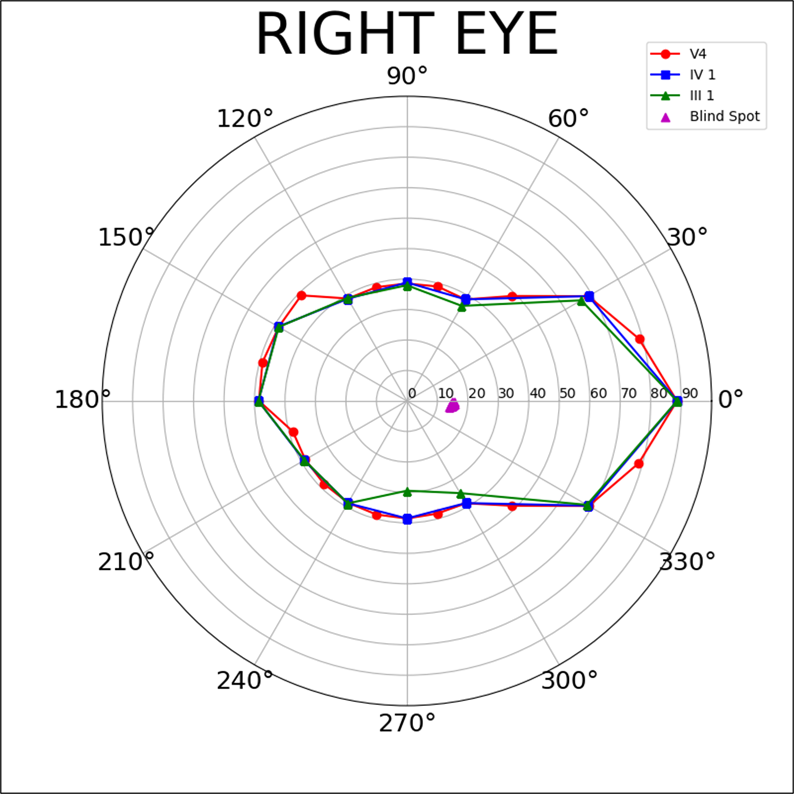
Kinetic perimetry, left eye
Left eye
Kinetic perimetry, right eye
Right eye
Merged view of both eyes at 90 degrees
Merged view — complete profile

Protocols

Ten modes for reaction times

EX 1Simple reaction time, dominant hand
EX 2Simple reaction time per single eye
EX 3Go / No-Go reaction time
EX 4Choice reaction time
EX 5Choice reaction time with distractors
EX 2S‑ODSimple reaction time, right eye
EX 1‑SSimple reaction time, short
EX 2S‑OSSimple reaction time, left eye
EX 3‑SGo / No-Go reaction time, short
EX 4‑SChoice reaction time, short

Reports

A report for every test, ready to read

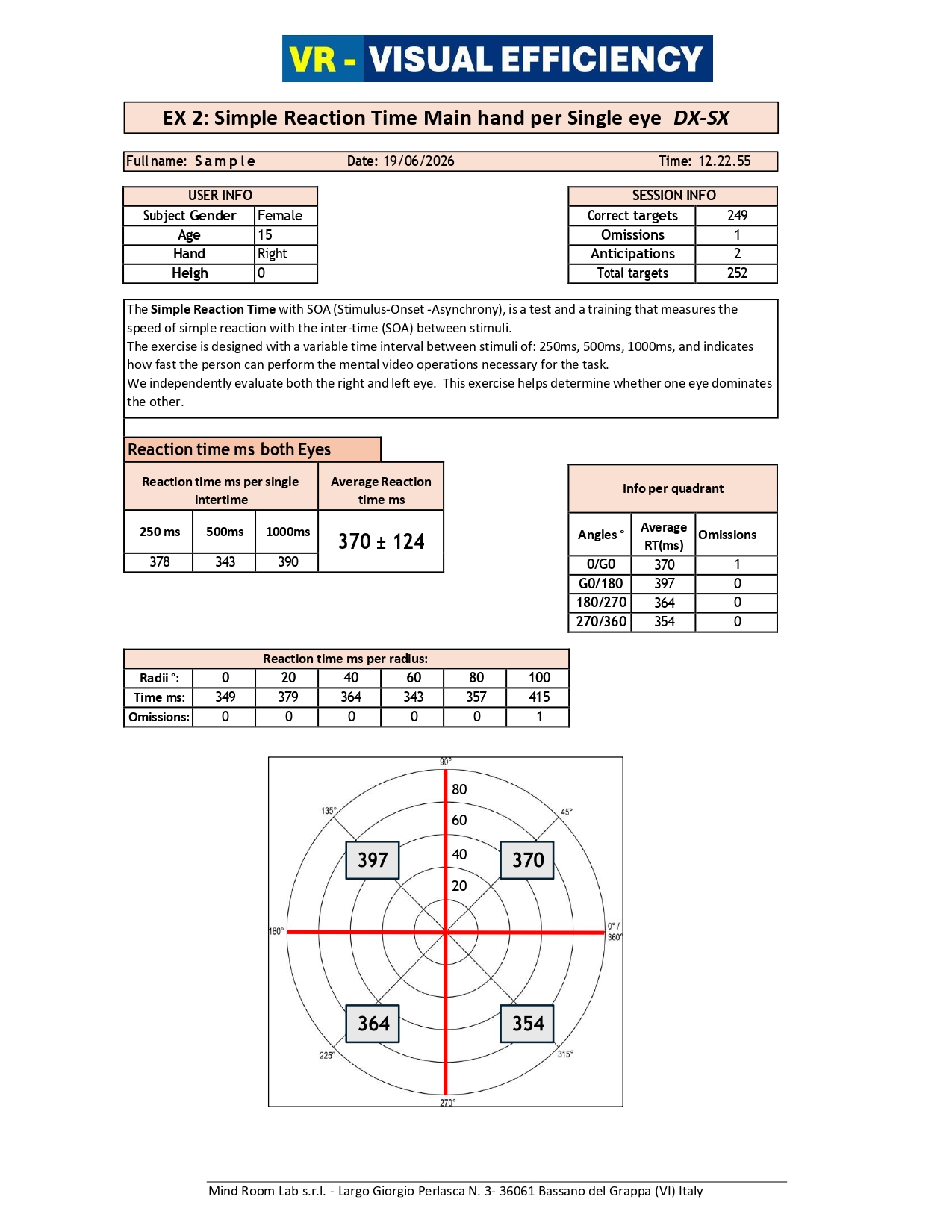
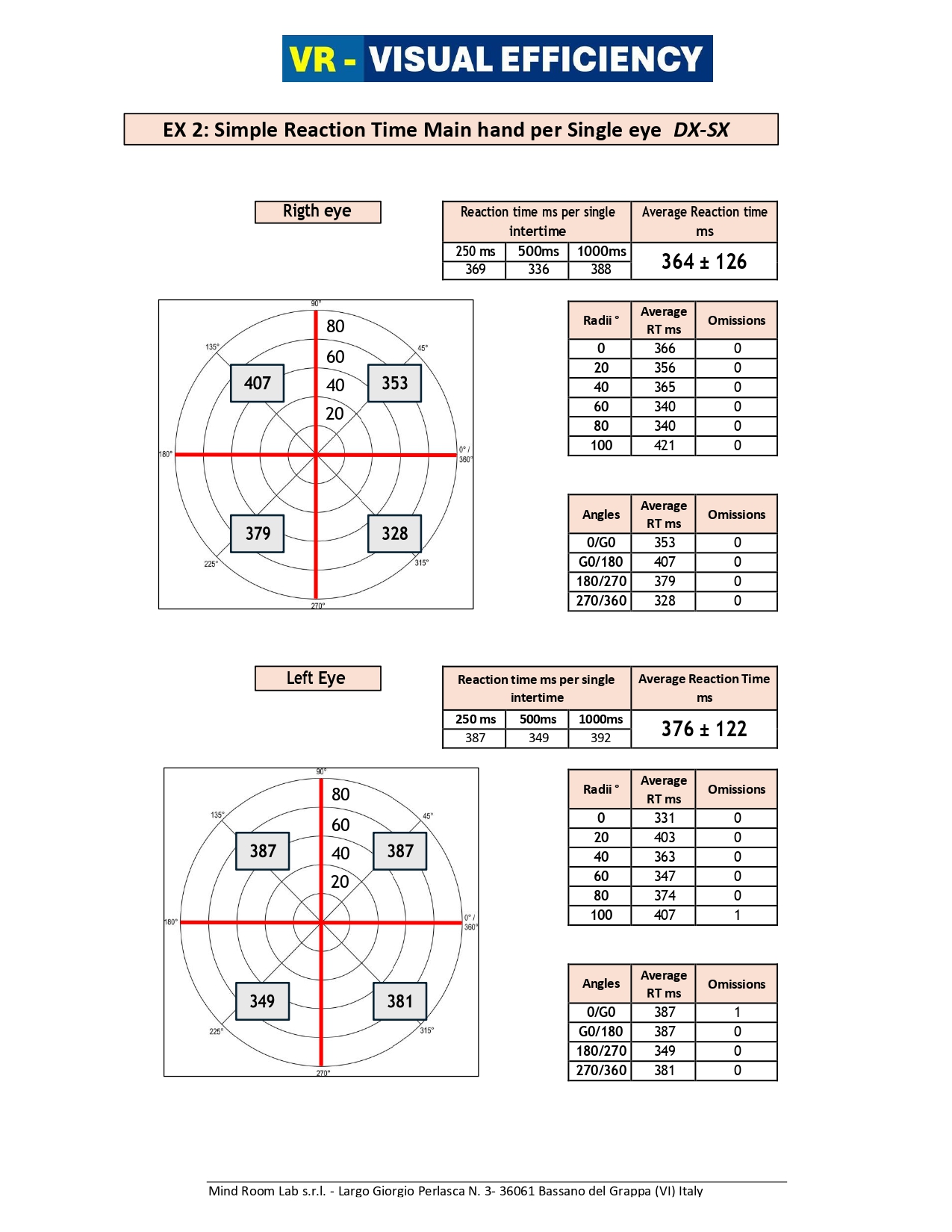
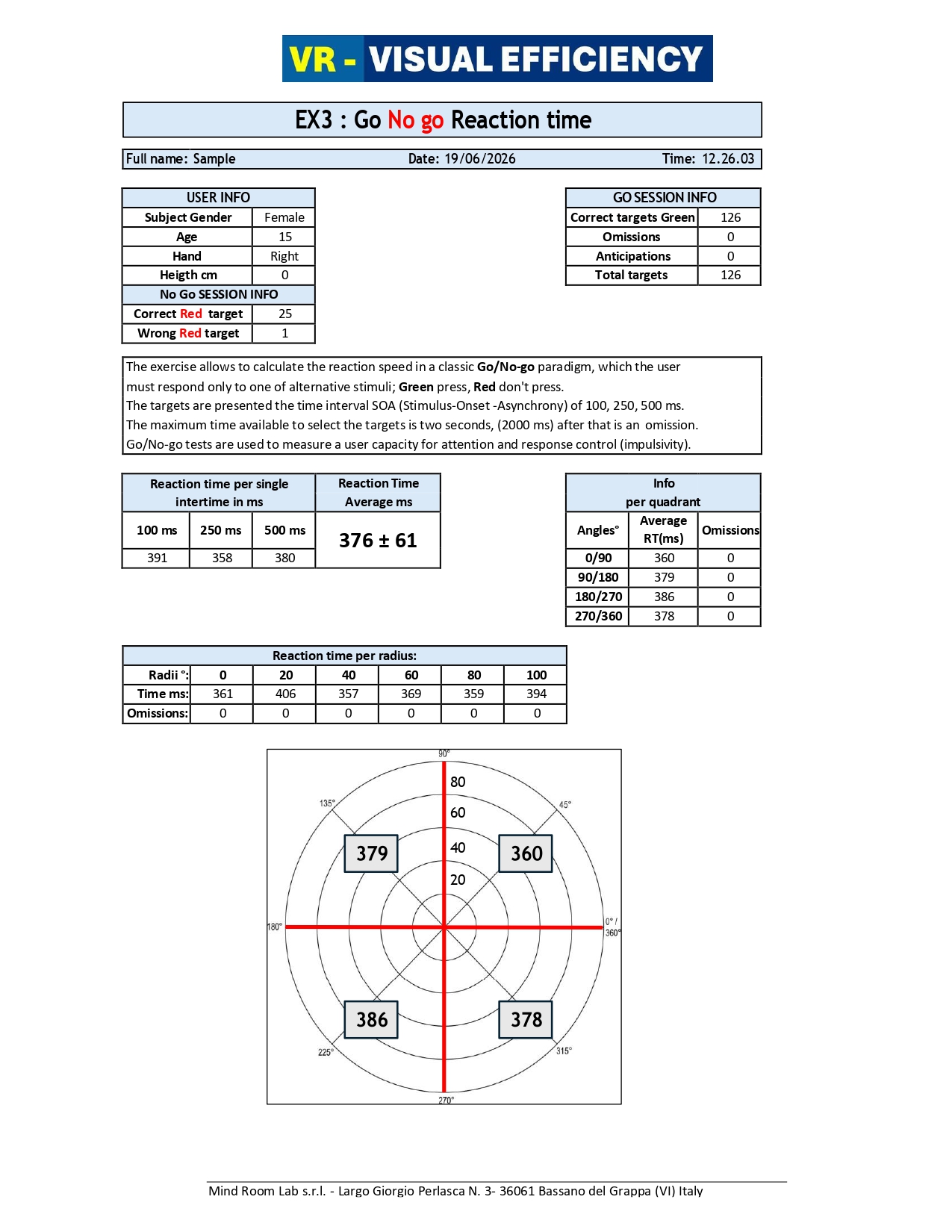
At the end of each session, the application automatically generates a report with the collected data.
Here are some real examples generated by the application.
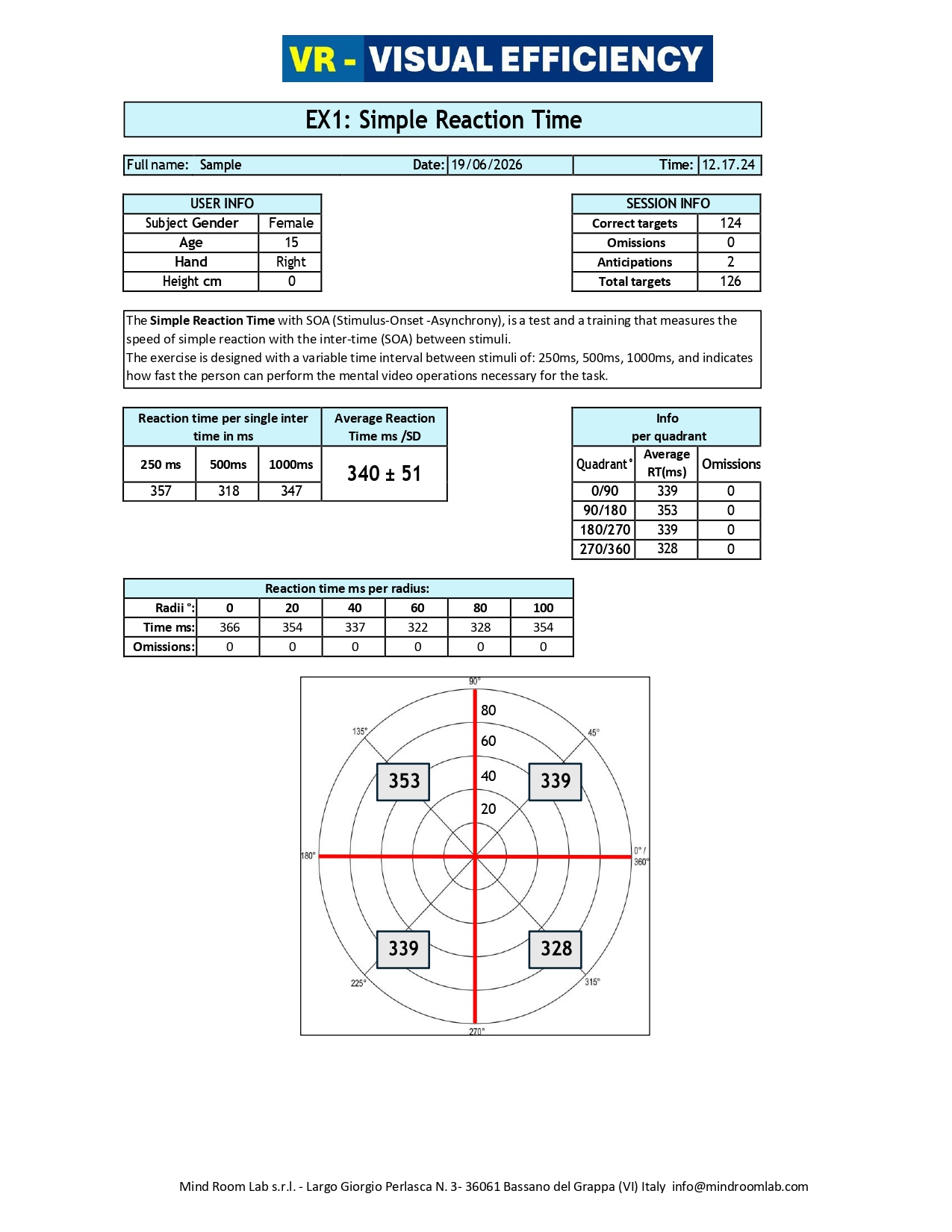
Report EX1 — simple reaction time
EX 1Simple reaction time
Report EX2 — reaction time per single eye, summary
EX 2Reaction time per single eye
Report EX2 — right and left eye detail
EX 2Right and left eye detail
Report EX3 — Go/No-Go reaction time
EX 3Go / No‑Go
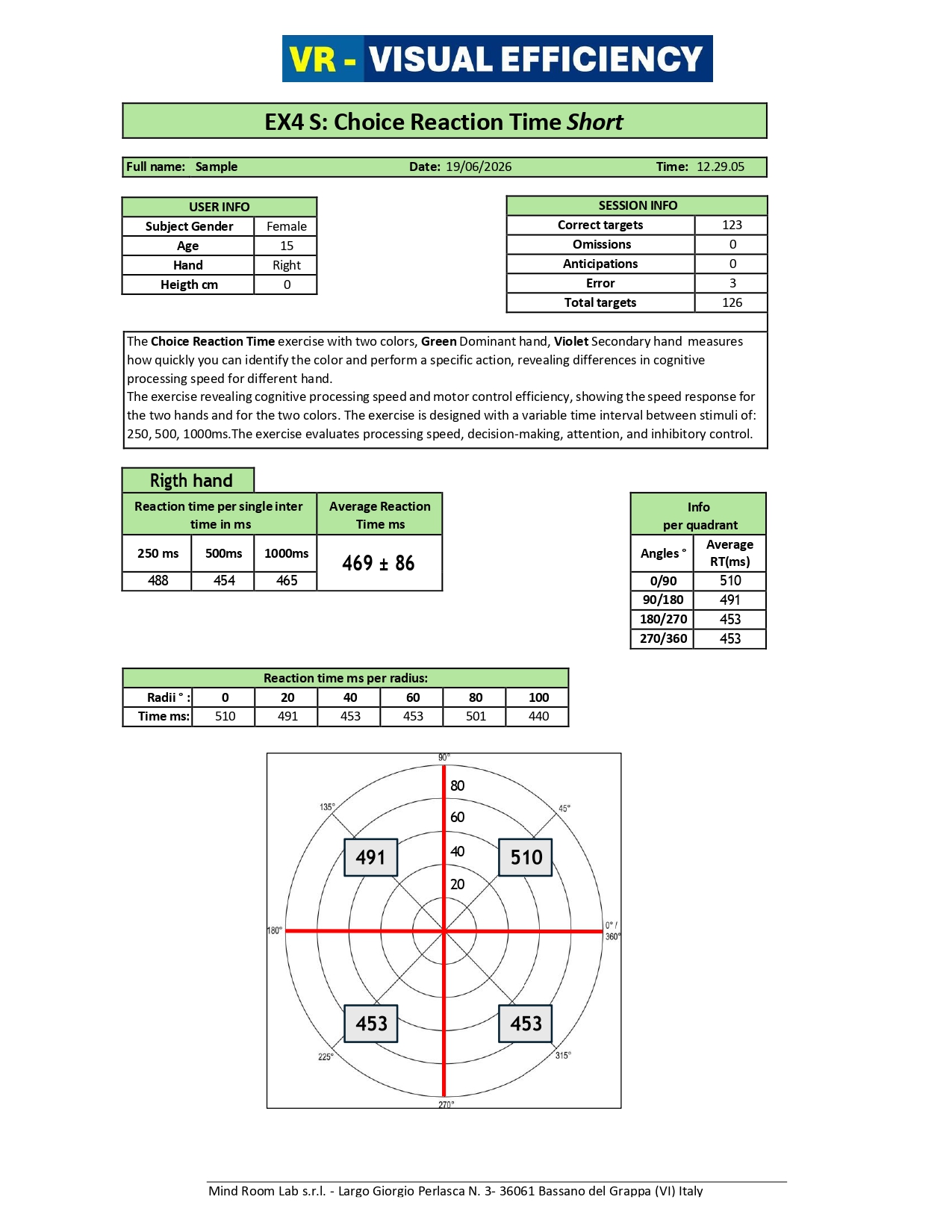
Report EX4 — choice reaction time, right hand
EX 4Choice reaction time — right hand
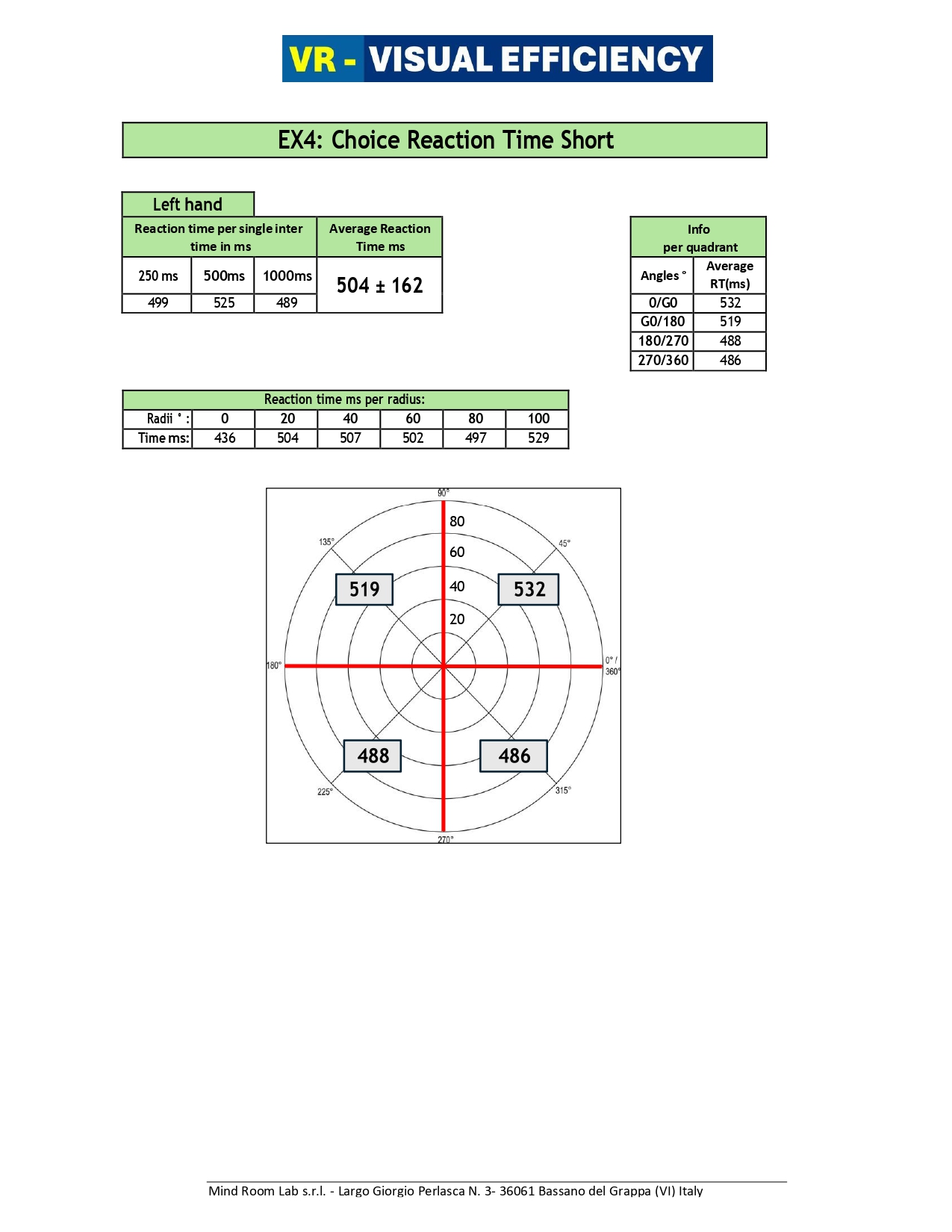
Report EX4 — choice reaction time, left hand
EX 4Choice reaction time — left hand

Benefits

The advantages of Virtual Reality

Kinetic perimetry in virtual reality replaces old fixed instruments with lightweight headsets, offering more comfortable, faster and more precise visual field testing, in any setting.

Why VR

  • Immersive technology — powerful and engaging, built for cognitive training.
  • No fixed hardware — the headset is portable and needs no dedicated space.
  • Zero distractions — full immersion keeps the athlete focused during assessment and training.
  • Standardized conditions — makes progress easy to compare across sessions and users.
  • Brain plasticity — the exercises work at a cognitive level, training the brain itself.
  • Hard-to-replicate stimulation — reproduces nerve stimuli that are difficult to achieve in the gym.

Portability and comfort

  • Minimal weight — the headset is small and light compared to large traditional instruments.
  • Portable — usable in any setting, sports or clinical.
  • Compact — no dedicated room needed, just a desk.

Precision of execution

  • Mono and binocular testing — evaluates both eyes together or a single eye.
  • Movement tracking — the system follows the person's eyes and head, avoiding errors.
  • No fatigue — the short test duration keeps focus high throughout.
  • Instant report — visual field charts are generated and archived immediately.

Bring VR Visual Efficiency
to your team.

Request information to find out how to integrate the tests and cognitive training into your team's routine.

Request information